Key idea: A deep conceptual understanding requires the ability to make connections between the three levels.
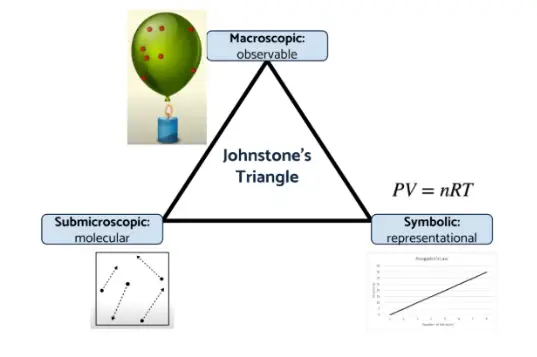
In the early 1980’s Alex Johnstone (Macro- and micro-chemistry. School Science Review. 1982; 64, 377-379) proposed that chemistry is difficult for many people to understand because chemistry knowledge is understood or represented on three different levels.
- Macroscopic: observable with your senses (things we can see, feel, or measure)
- Particulate (sometimes called sub-microscopie): at the level of atoms, ions, molecules – things we cannot see with the naked eye, our eyes, even with the help of a microscope
- Symbolic: chemical equation (specific chemical reaction or general A+B→ C), graph, mathematical equation
Johnstone suggested instruction should usually begin at the level learners can most readily relate to (macroscopic), but that most instruction tends to take place at the most abstract (symbolic) level.
Though experts move seamlessly between the three levels, novices often reason along the edges of the triangle and need to gain practice and experience moving between these levels. Learners taught to translate between these levels are generally more successful in solving general and organic chemistry problems (Bodner & Domin, 2000; Coppola & Hounshell, 1995). Videos with the ability to include images, animations, simulations, and physical demonstrations can capture and represent each of the different levels in ways that are challenging for traditional classroom instruction. The ability to readily incorporate moving images, animations, etc. provide the potential for supporting viewers in the challenging task of developing mental models that connect the different levels of representations (for example, Chittleborough & Treagust, 2007).
Key idea: Chemistry concepts are best learned when they are linked to the core ideas of the discipline.
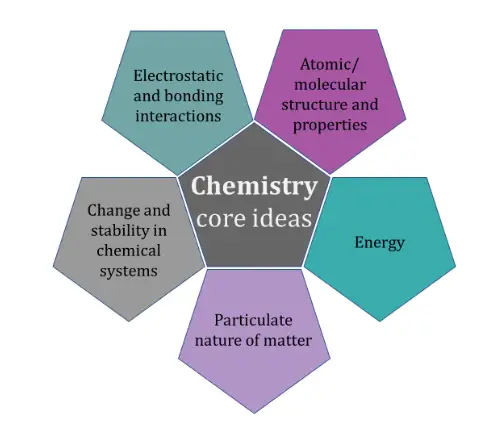
Chemistry Core Ideas are one of the dimensions of three-dimensional (3D) learning articulated in the Framework for K-12 Science Education (the Framework). Though designed for K-12, the Framework is based on research on student learning in the sciences and is applicable to undergraduate science education. Chemistry Core Ideas are explanatory and generative concepts fundamental to chemistry which underlie traditionally taught chemistry topic serving as common threads that span through the chapters of typical textbooks.
Most chemistry topics or concepts have multiple relevant Core Ideas. A video focused on developing a strong conceptual understanding of a topic should clearly connect one or more of the Core Ideas to the topic.
The five chemistry core ideas that we use are:
- Electrostatic and bonding interactions
- Atomic/molecular structure and properties
- Energy
- Change and stability in chemical systems
- The particulate nature of matter
The first four are the chemistry Core Ideas for college chemistry identified by the 3DLAP (Learning Assessment Protocol) research team (Laverty et al, 2016). The fifth, the particulate nature of matter, comes from the Framework, which fits well for both high school and for general chemistry classes.
Key idea: Engaging learners in science practices helps them understand how scientific knowledge is developed, supporting a more coherent and connected understanding of science concepts.
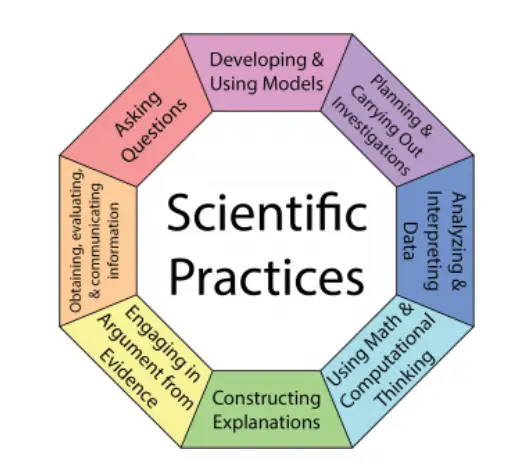
Science Practices are another dimension of three-dimensional (3D) learning articulated in the Framework for K-12 Science Education (the Framework) that encompass the activities scientists regularly engage in. Engaging learners in science practices helps them understand how scientific knowledge is developed, supporting a more coherent and connected understanding of science concepts. Although videos do not inherently engage the learner in activities, they can model the practices.
The Science Practices have been operationalized for classroom instruction, with Engaging in Arguments from Evidence and Constructing Explanation combined (Bain et al, 2020). To be considered as containing a science practice, a video must meet all the criteria for the practice. The criteria as defined by the 3D-Learning Observation Protocol for the four science practices most commonly observed in videos are shown.
| Science Practice | Criteria (all must be present) |
|---|---|
| SP 6: Constructing Explanations and Engaging in Argument from Evidence |
|
| SP 2: Developing and Using Models |
|
| SP4: Analyzing and Interpreting Data |
|
| SP 5: Using Mathematics and Computational Thinking |
|
Key idea: Meaningful understanding of chemistry concepts requires making causal connections between individual particle actions and macroscopic observations.
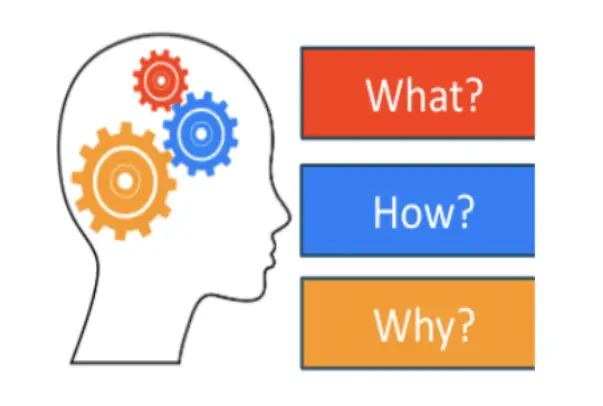
Chemistry allows us to predict and explain macroscopic observations and the properties of materials using particle motions, interactions, and behaviors (Talenquer, 2018). This Causal Mechanistic Reasoning (CMR) demonstrates a deep, connected understanding of chemistry concepts. Creating such explanations is challenging for novice learners and requires practice. CMR can be viewed as answering three distinct questions about a phenomenon: “what?”, “how?”, and “why?”. Videos containing CMR focus on helping the learner develop a richer understanding of the topic as opposed to presenting facts or solving algorithmic problems. Developing CMR can help learners to apply their knowledge to understand new situations or phenomena. Students can develop this level of reasoning through suitable constructed curricular materials and question prompts (for example, Becker et al, 2016; Cooper et al, 2016).

Key Idea: Learning is maximized when videos are designed to minimize content extraneous to learning and provide structure for meaningful organization of learning so that learners can focus attention on understanding the core ideas.
Richard Mayer identified 12 principles that support learning from multimedia built on three assumptions: (1) dual-channel theory – learning is enhanced by simultaneously targeting people’s separate visual and auditory reception channel; (2) limited capacity assumption (Chandler & Sweller, 2009)- people can only process a limited amount of information, 5-7 chunks, at once; and (3) active processing assumption (Chi & Wylie, 2014) – learning requires active engagement in cognitive processes (e.g., identifying and selecting relevant information or integrating new models with prior knowledge).
Mayer’s 12 principles are designed to to reduce extraneous load (cognitive effort wasted on things not supporting learning), manage intrinsic load (cognitive effort required to represent things in working memory), and optimize germane load (effort required to understand the material). Previous work by Magnone, et al., indicated that not all principles are equally relevant for comparing chemistry YouTube videos. Building on their work, we focus on four criteria 1) coherence 2) use of Images, 3) organization (an element of signaling), and 4) the redundancy and multimedia principle. Together, these four criteria address Mayer’s three core ways to support learning processing.
Here is how we evaluate these criteria:
| Criteria | Operationalization of Criteria | Support for Learning |
|---|---|---|
| Text | Text on screen is minimal (ex. Only brief bullet points or keywords if text is used) | Reduces extraneous processing |
| Segmenting | Contains elements that meaningfully support student organizing content or identify key ideas (introductory organizer, section heading, summary, guiding questions/topic (for short, focused video only) Key Question: Could a novice learner clearly understand what they should take away from the video? | Manages essential processing by identifying key information |
| Coherence | Content is all relevant to the topic and learning (no music, unhelpful animations, graphics, etc.) | Reduces extraneous processing by removing unnecessary distractors |
| Image | Video almost exclusively involves meaningful and relevant images and verbal components AND images are explained for a novice learner | Fosters generative processing and helps integrate content with prior knowledge |
Interested in Mayer’s full set of principles? Here they are!
- Multimedia: Videos should include narration and visuals
- Coherence: Exclude unnecessary information, graphics, and sounds
- Signaling: Key points should be highlighted
- Redundancy: Graphics or text should complement a spoken presentation
- Spatial Contiguity: Related text and visuals should be on-screen close together
- Temporal Contiguity: Narration and related visuals should be presented simultaneously
- Segmenting: Content should be organized in manageable, coherent chunks
- Pre-training: Ensure that learners have essential prior knowledge of key concepts and terms
- Modality: Written text should be limited; rely on visuals and spoken words
- Voice: Human voices are better than machine voices
- Personalization: Use a conversational tone and first person
- Image: Minimize talking heads on the video
Key idea: Video effectively support learning when they are factually correct and intentionally designed so that all viewers can understand and relate to the content.
Content Accuracy: In addition to flagging issues where content is not accurate, we seek to identify potentially misleading elements that may arise from things such as over simplifications (e.g., using a balance to represent equilibrium) or personification of atoms, which makes understanding emergent properties more challenging.
Analogies: Analogies can be very powerful teaching tools to help learners connect the unobservable to something they have prior knowledge or experience with (Orgill & Bodner, 2004). However, analogies are only useful if the learner has knowledge of the analog example. For example, comparing something to a magnet is not helpful to someone who has never seen or used a magnet. This can be minimized in videos by showing the analogy visually instead of just referring to it verbally. Lacking the visual component adds additional cognitive load for those unfamiliar with the referenced process.
Equitable Use: We also consider the quality of closed captioning as an aspect of Universal Design in terms of video captioning. Captioning supports hearing impaired learners as well as learners watching videos in their non-native language or learning new technical terms. Nearly 40% of American adults use captions when watching videos. Though YouTube automatically captions videos, auto captioning does not include punctuation or capitalization of words and may incorrectly caption scientific terms used in chemistry videos.